GLOBAL RELEVANCE

Local learning.
Global responsibility.

EdVantage’s contribution begins with what learners can understand, investigate and responsibly act on. Transformative Learning Projects© connects classroom knowledge with the social, environmental and economic choices that shape everyday life.

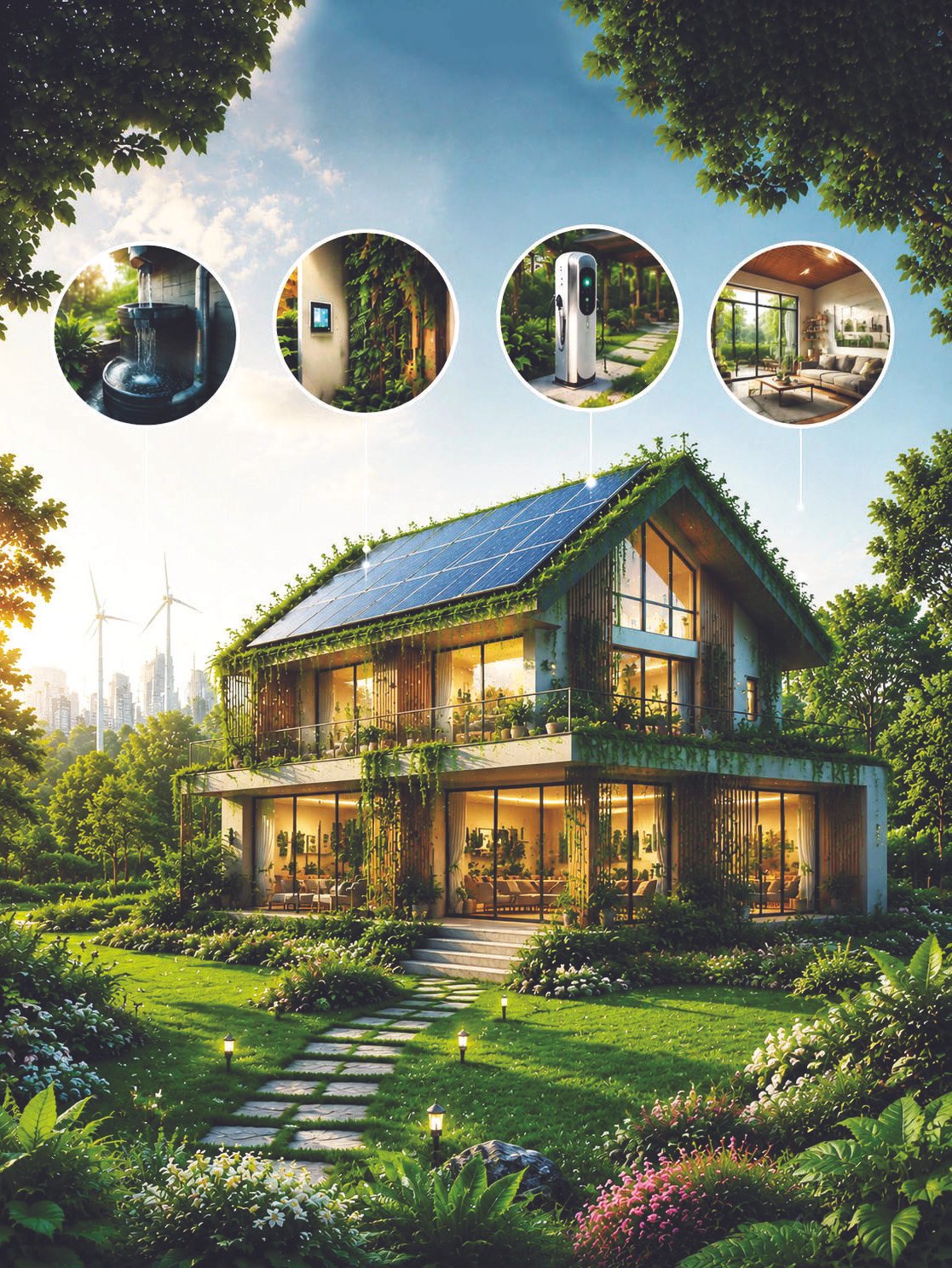
A sustainable house design connecting learning with environmental decisions
Homes of Tomorrow · illustration from the Grade 8 book.

WHY THIS WORK MATTERS

Sustainability needs
informed decisions.

A learner designing a canteen must consider nutrition, affordability and waste together. A learner planning a home must connect climate, comfort, materials and resources. These decisions give academic knowledge a purpose and make trade-offs visible.

EdVantage develops the learning resources and structure through which students can practise this thinking: investigate a real problem, evaluate evidence, listen to others, justify a choice, revise a response and explain its consequences.

This page describes the educational contribution designed into the projects. It does not present worldwide delivery or independently measured environmental results.

THREE CONNECTED IDEAS

From global aims
to classroom practice.

ESD

Learning for sustainable development

Education for Sustainable Development connects knowledge, skills, values and responsible decisions about people and the planet. TLP© gives learners opportunities to practise these through inquiry, collaboration and a response to a real problem.

UNESCO: ESD ↗

GREEN CURRICULUM

Sustainability across subjects

A green curriculum connects environmental, social and economic questions with understanding, values and action. In TLP©, resource use can be investigated through science, quantified in mathematics and communicated through language.

UNESCO: greening curriculum ↗

SDG 4.7

An educational contribution

UN target 4.7 calls for learning that supports sustainable development, sustainable lifestyles, global citizenship and cultural appreciation. TLP© creates opportunities to develop these capabilities through assessed project work.

UN: Goal 4 and target 4.7 ↗

WHAT LEARNERS PRACTISE

Understanding.
Judgement. Action.

The connection goes beyond choosing an environmental topic. It depends on the quality of the learning process.

CONNECTED THINKING

See relationships

Investigate how health, cost, resources and people’s needs affect one another. Compare possible responses and explain their trade-offs.

EVIDENCE & FORESIGHT

Question and anticipate

Check sources, interpret data, consider consequences and acknowledge uncertainty. Climate models and house designs provide concrete opportunities to practise this.

COLLABORATION & RESPONSIBILITY

Act with others

Listen, consult, share responsibilities and improve work through feedback. Explain who a proposed solution serves and how its effects could be checked.

HOW THE DESIGN SUPPORTS LEARNING

Evidence at
each stage.

The six-stage TLP© sequence moves from engagement and knowledge-building to inquiry, analysis, design, refinement and public sharing. Outcomes must be demonstrated and validated before a stage is cleared. Logs, decision explanations, drafts, rubrics and reflection provide evidence of progress.

Explore the TLP© framework ↗

ETHICAL RESPONSIBILITY

Values within the work

CEIF© grounds character practice in the Qur’an and Sunnah. Within projects, this includes honesty in evidence, responsible use of resources, consultation, respect for others and service. Its focus is observable conduct and reflection in real tasks.

Explore CEIF© ↗

PROJECT CONNECTIONS

What the connections
look like in practice.

The following are educational mappings from the published project tasks to relevant SDG themes. They are not UN certification or claims that a goal has been achieved.

GRADE 6

Voices of Wisdom

Culture, dignity and intergenerational learning

SDG 4.7 · cultural appreciation and global citizenship

Listening to elders and interpreting their experiences makes cultural memory and human dignity part of academic inquiry. The podcast gives learners a reason to listen carefully and communicate responsibly.

Evidence and potential contribution

Interview notes, theme analysis, a consent-aware script and reflection can show the quality of listening and representation. Stronger intergenerational relationships would need participant feedback and follow-up.

Read the project details ↗

GRADE 6

Smart School Canteen Startup

Healthier choices and responsible consumption

SDGs 3 and 12 · wellbeing, consumption and waste

The canteen becomes a connected problem: food choices affect health; prices affect access; packaging and leftovers affect waste. Learners compare these needs when preparing a feasible startup proposal.

Evidence and potential contribution

Surveys, price comparisons and a justified menu can demonstrate learning. Changes in food choices, affordability or waste need measurements after a school adopts the proposal.

Read the project details ↗

GRADE 6

Water Safety Task Force

Water awareness and community wellbeing

SDGs 6 and 3 · clean water and health

Learners investigate water sources and possible contamination pathways, then communicate evidence and propose a response. Scientific understanding is connected to responsibility for a shared resource.

Evidence and potential contribution

Research logs, charts and a justified campaign or demonstration show the learning process. Safer water or changed practices require appropriate testing and follow-up beyond the classroom output.

Read the project details ↗

GRADE 7

Emergency Safety Audit

Safer and more inclusive learning environments

SDG 4.a and SDG 11 · school environments and community resilience

A school safety audit asks learners to notice risks, consider who may be affected and prioritise practical improvements. Consultation and care become part of evidence-based decision-making.

Evidence and potential contribution

Risk records, prioritisation and the School Safety Action Plan show students’ reasoning. Reduced risk depends on authorised implementation and subsequent review by the school.

Read the project details ↗

GRADE 8

Behind the Message

Responsible information and informed citizenship

SDG 4.7 · citizenship and responsible judgement

Students examine how messages influence choices and develop an ethical campaign. This supports the ability to question sustainability claims and communicate without exaggeration; a climate-specific link depends on the campaign topic chosen.

Evidence and potential contribution

Media analysis, audience research, revised campaign drafts and explanations can show critical judgement. Audience understanding or behaviour change needs separate feedback and evaluation.

Read the project details ↗

GRADE 8

Homes of Tomorrow

Climate-responsive design and resource use

SDGs 11, 12 and 13 · settlements, resources and climate

Comfort, ventilation, daylight, water and materials are considered together. Learners use subject knowledge to reason about climate-responsive living and the practical limits of a design.

Evidence and potential contribution

Measurements, calculations and a justified model show design thinking. Energy, water or comfort improvements remain proposed benefits until evaluated in an appropriate real setting.

Read the project details ↗

GRADE 8

Climate Data Lab

Climate literacy and informed action

SDG 13.3 · climate education and awareness

Students use environmental datasets to study patterns, build simple models and consider uncertainty. An action plan must follow from the analysis, giving climate learning an evidence-based purpose.

Evidence and potential contribution

Source records, graphs, model assumptions and an explained action plan show analytical learning. Predictions are conditional; environmental change requires implementation and monitoring.

Read the project details ↗

UNDERSTANDING IMPACT

From a learning opportunity
to evidence of change.

1 / DESIGNED INTO THE RESOURCE

Learning opportunities

The books document real-world questions, curriculum connections, student tasks, staged outcomes and assessment. These establish what the programme is designed to support.

2 / DEMONSTRATED IN CLASS

Learning and outputs

Student records, teacher assessments, drafts, reflections and presentations can show what learners understood and produced. A finished product alone does not establish every intended competency.

3 / FOLLOWED UP OVER TIME

Sustained change

Changes in habits, school practice, resource use or community conditions need baseline information, implementation records and follow-up. These outcomes should be reported when evidence is available.

Our company-reported figures—10+ partner schools, 400+ students impacted and 40+ teachers trained—describe our current reach. The core team brings 25+ years of experience. These figures are distinct from measured learning gains or environmental outcomes.

Basis of this overview

Project descriptions draw on EdVantage’s Grade 6 student book, Grade 8 student book, Project 702 Emergency Safety Audit, TLP stage-clearance framework and CEIF© framework. The SDG connections above are an interpretation of those learning tasks, informed by the ESD discussion and the international references linked on this page.

For the wider goals, see the United Nations Sustainable Development Goals. Curriculum and SDG connections do not imply accreditation, partnership or endorsement by UNESCO, the UN or Cambridge.

Bring these questions into your school.

Explore the projects and discuss the curriculum connections, teacher preparation and evidence of learning relevant to your learners.

Start a conversation ↗

FOR OUR SCHOOL COMMUNITY

School Portal

School Portal ↗